Aug 2021: Wrongly Placed Recyclables
- Kaili Brande
- Aug 17, 2021
- 3 min read

Updated: Aug 18, 2021
Hi everyone, and welcome back to the blog! For this month’s post, we will be featuring content from a friend of mine, Olivia d’Arezzo, who is also a student at my university (she’s undergrad, I’m grad)! We were recently discussing ways to make our lives more sustainable, and one hot topic we discussed was wrongly placed recyclables. One of the first things people think of when trying to be “eco-friendly” is recycling, so evaluating the nuances of recycling is a great next step to become more sustainable. See my previous post here on the basics of recycling (always a great place to start if you are just starting your sustainability journey)!

Often times, we find ourselves with a waste item, and even though we’re unsure if it will be recycled, we put it in the recycling bin because we want it to be recycled. This tendency has previously been described as “wishcycling”. Placing non-recyclable items in the recycling bin can seem like the best thing to do, because at minimum “the recycling center will just throw it away if they can’t use it”, right? Unfortunately, no. (Don’t worry, a lot of us (including myself) have thought this!)
it creates more work for the people (or machines) that sort through all the materials
some non-recyclable materials can even clog the machines at the recycling plant (i.e. bottle caps)
any non-recyclable material mixing in with the recyclable material (i.e. when different paper products are mixed together into a “recycled” pulp) can cause the entire batch to become “contaminated” and no longer usable
if an incoming truckload of materials is too "contaminated", the recycling plant won't even accept the load and will redirect it straight to a landfill

This doesn’t sound like something we’d want to contribute to! Therefore, we need to know the rules of recycling. The best thing we can do as consumers and citizens is to learn the local recycling rules for our neighborhood, city, or county. Here are examples for Santa Barbara County, the city of Los Angeles, and Orange County (all located in California). They are often posted on the official website of the city or county, and at least provide general guidelines for what is and isn’t accepted.
Sometimes, infographics and recycling lists don’t provide guidance for what to do with certain recycle symbol numbers (i.e. in Santa Barbara only plastic #’s 1, 2, and sometimes 5 are accepted right now). See my previous post for a more in-depth description of plastic #’s. Therefore it's also important to check which #’s are accepted locally.
Furthermore, these lists may also not cover some obscure waste items that are used on a daily basis. Below is Olivia’s list of some unique items that are commonly wishcycled, and how you can dispose of them responsibly! Parts of this list are specific to the Santa Barbara city area of California, but most parts will apply to many California communities. Therefore, I encourage you to check for the equivalent recycling centers and hazardous waste collection centers in your local community:
Film plastic should be placed in the trash and includes plastic bags, food wrappers, plastic packaging, and bubble wrap.
Styrofoam should be placed in the trash or recycled at the Marborg Recycling Center at 20 David Love Place (Santa Barbara area).
Electronics can be recycled at Best Buy, Staples, and the Marborg Recycling Center at 20 David Love Place (Santa Barbara area).
Lightbulbs can be disposed of at the UCSB Community Hazardous Waste Collection Center (https://www.marborg.com/ucsb-recycling-facility-santa-barbara) (Santa Barbara area).
Batteries can be collected in a plastic ziploc bag and placed on top of the blue recycling bins on collection day.

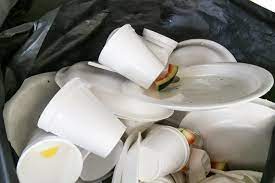


Furthermore, while some of these items might be completely necessary for certain uses (i.e. batteries for certain appliances), others (i.e. Styrofoam) could be avoided completely to prevent having this separate disposal process. Why not just not buy it in the first place? In the case of Styrofoam, there are already movements to ban the material.
For the rest, properly recycling these items will reduce the bulk of waste being sent to landfills, and could even prevent further contamination of landfill sites (i.e. batteries leaking toxic liquid into groundwater below the landfill).

So what do you say? Should we start rightly placing our recyclables? Thanks again to Olivia for starting this conversation! 😊


great blog! Was this triggered by our discussion of the Outrigger trash choices? Haha