May 2020: Planned Obsolescence
- Kaili Brande
- May 15, 2020
- 5 min read

Updated: Jan 8, 2022
Hey Everyone! Welcome back to the blog. I hope everyone is doing well during these unusual times. This month’s post will discuss a broader theme in our society that is a huge barrier to sustainability. While “planned obsolescence” is likely a term you’ve never heard before, it manifests itself everyday in our lives, especially in the technology that surrounds us.

Planned obsolescence essentially refers to producers’ (or companies’ and manufacturers’) tendency to make products that only “last” a certain length of time before they become outdated, don’t work as well, or simply become unfashionable. In a single word, your tech product quickly becomes “obsolete”. This cycle of buy, use, and throw away represents a linear economy, where the use of materials follows a linear path. This type of economy allows for the production of a lot of waste and doesn’t factor in any principles of sustainability. A circular economy, on the other hand, allows the use of materials to follow a circular path, where resources can be reused, and there is a lot less waste leftover. Usually a circular economy puts much less strain on the environment. The diagram below can help explain the two.

As you may have guessed, our capitalistic society currently operates within a linear economy. For example, if you happen to be an iPhone user like me, you might have noticed how after a year or so, your iPhone that was so efficient and “top of the line” just a few months ago suddenly works slower after a new “update”. One might suspect that these changes are incentive to just buy “the next up and coming model” since your old model isn’t working well, anyways. So many of us consumers fall into this trap, buying the hottest new tech device whenever it becomes available. But this cycle comes at a high environmental cost: lots of tech waste. The photo below shows the 10 iPhone models produced over an only 8 year period (2007-2014).

One solution to this issue might be that we simply fix our products when they start to work slowly or when they break. However, in our current state of society, a consumer’s ability to fix a broken item is limited either by:
1) their lack of knowledge
2) the product’s qualities (it is unfixable or not worth the money or time investment to fix)
An example of this issue is a Canon home printer. If the printer ever breaks, it would cost the consumer more money and/or time to buy the parts and fix it themselves (or take the printer to a repair technician) than whatever the consumer originally paid for the printer. Therefore, the consumer chooses to buy an entirely new printer, and the old printer goes in the dumpster, contributing to our ever-growing problem of overfilling landfills. I've seen this happen several times in my own household.
This tech waste, because of the energy it took to produce and manufacture the plastics, metals, and other valuable elements that went into the product, contributes to greenhouse gas production and therefore climate change. Furthermore, once the tech waste reaches the end of its life in a landfill, its heavy metal content has the potential to leach into and contaminate local water supplies. Since the city of Guiyu, China accepted global tech waste for many years, their people were exposed to a host of health risks, sparking human rights and ethical issues as well. Sounds like a pretty toxic problem to me.


One might think that just recycling electronic waste (“e-waste”) could be the answer. In 2018, Apple instituted a robot that recycles its own iPhone parts. While recycling can help alleviate some of the burden being sent to landfills (see my previous post!), recycling is never an all-encompassing solution to an enormous waste problem such as this. And unfortunately, according to a United Nations estimate, less than a quarter of all U.S. electronic waste is recycled. This amount has likely been further reduced since China stopped accepting shipments of trash, plastic, and e-waste from outside countries (including the U.S.) in 2018. This means at least 75% of all our e-waste has either ended up in a landfill or on the shores of a poorer (likely Asian) country.
Instead, reducing or preventing usage of products in the first place is the best answer. As seen below in the classic environmentalist mantra, “reduce” comes first before “recycle”!
As consumers, we can make more thoughtful decisions about what we buy and how often we buy new products. The saying “if it ain’t broke, don’t fix it” should apply well when considering whether to buy a newer version of your tech product! Reducing the amount of new tech products we buy will also save us money in the long term, and help to redirect our money away from “things” and more toward valuable “experiences”. See my previous blog post on the value of experiences versus things (especially in relation to buying gifts for people!).
Of course, it would be great if we could fix more of our own technology, but as mentioned above, I do recognize there are limits to how much tech knowledge folks may be able to learn or access. Additionally, we as consumers don’t always have a say in how producers make their products. If they make them so that they break after 5 years, there isn’t much you can do once you’ve bought the product to extend the life of the product. It is what it is.
However, you CAN learn to fix some products, and the IFIXIT website has tons of useful information on how to fix all sorts of things! Furthermore, you CAN make more thoughtful decisions about the products that you buy: if there is a more sturdy, long lasting version of the tech product you want, or they offer extended warranties or guaranteed repair services, that is the best option. This also applies to non-tech products, such as furniture, where choosing the more sturdy, long-lasting choice is going to be the more sustainable (and likely economical) option. The product will last you for years, rather than breaking and requiring you to buy another set within the same time frame (even if the up-front cost of the sturdy option is a bit more).

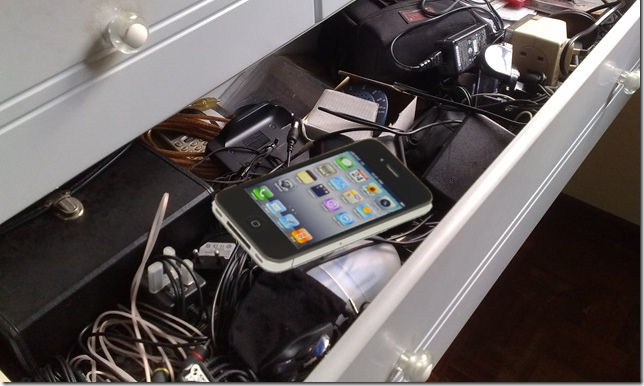
And of course, for tech products you’ve already purchased and can no longer use, you can send them to companies like Decluttr and Gazelle who refurbish and resell the products (saving them from the waste stream by fixing them and reselling them!), or take them to a local e-waste recycling facility. If you live in California, you can find a local recycling facility at this website.
During this time of coronavirus, there has been a resurgence of DIY projects: gardening, mending, and making your own masks (rather than buying them)! This time is therefore highly symbolic of how capable our society is of self-sufficiency: the ability to make do with what you have, fix your own things, and make it work for you regardless of whatever is being marketed out in the world.

As actress and activist Emma Watson once said, “As consumers, we have so much power to change the world by just being careful in what we buy”. This applies not only to tech products but any products we buy in our daily lives. Let’s use our buying power as our “vote” for what products we want available (or what waste we don't want in our world) and what kind of economic system we want in our society. Cutting down your personal waste, especially tech waste, is one of the most important steps you can take to become a sustainable citizen. Let’s become more thoughtful consumers by cutting down our e-waste: buying less, disposing of old products properly, and saving some money. We've got this! 😊


It is crucial to transform the e-waste into eco-friendly solutions and conserve the environment. Visit: https://www.northladder.com/ae-en/junk-to-jungles/ to know more about e-waste recycling program at Northladder.
Another instructive and mind opening blog. Thank you Kaili, These are great!